

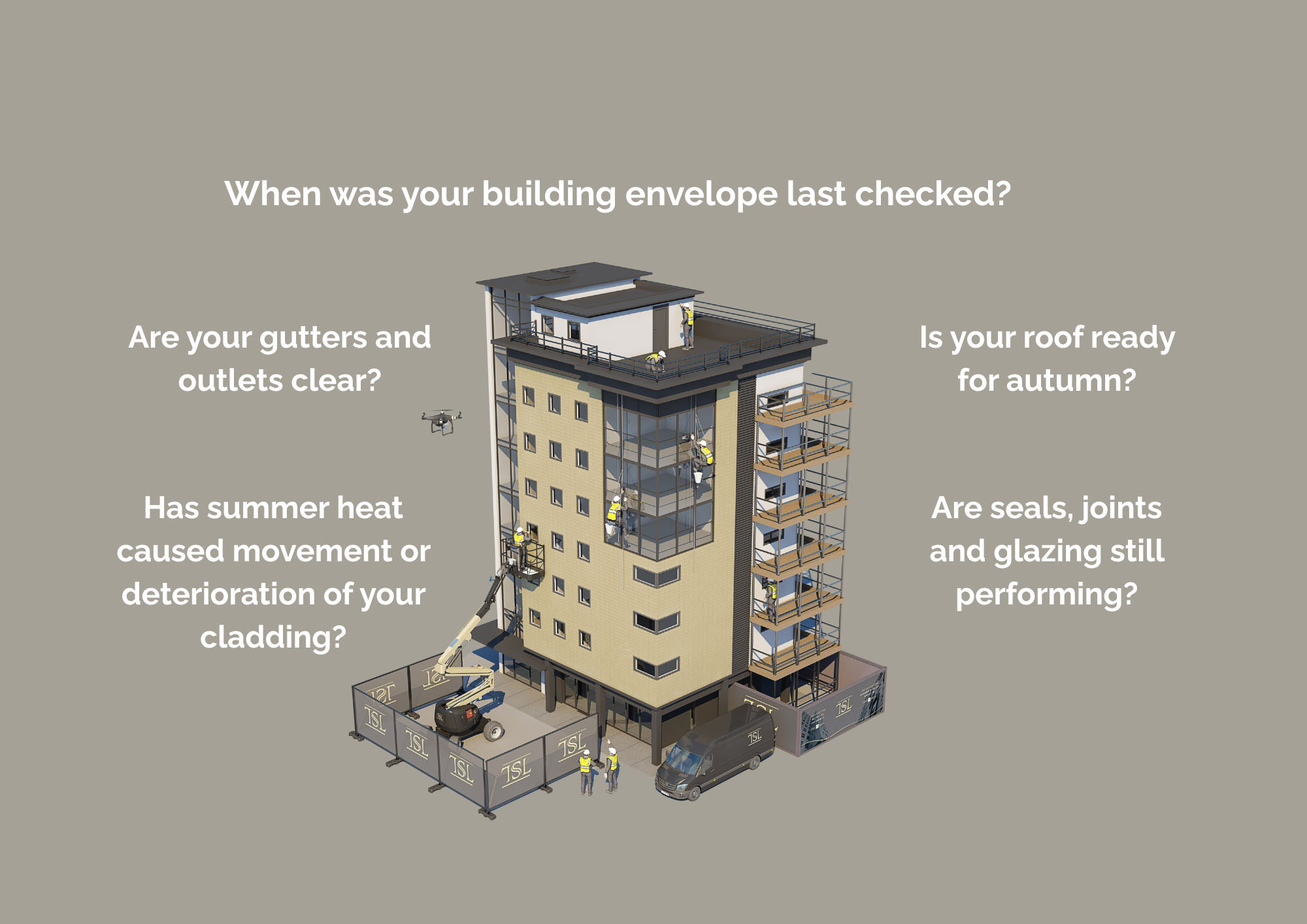
After a summer of prolonged high temperatures, autumn is the ideal time to carry out a building envelope inspection to assess how your building has responded before wetter weather tests any emerging defects.
Extended periods of high temperatures place additional stress on roofs, cladding, glazing and movement joints on top of normal wear and degradation. While most expansion is entirely normal, prolonged heat can expose existing weaknesses that may become costly failures when the weather changes.
What to look for
Small observations now can catch issues before they develop into larger and more costly problems. Prolonged heat, UV exposure and the resulting thermal movement can expose existing weaknesses, contribute to deterioration and place additional stress on building envelope components. Following an extended dry period, it is also important to check that drainage systems are clear and ready for increased autumn rainfall.
Use this quick checklist to inspect key areas of your building envelope and note any of the following:
Flat Roofs
- blistering or bubbling
- lifted laps and joints
- shrinkage around rooflights and penetrations
- movement at perimeter details
- cracked flashings
- loose edge trims
Roof Drainage Systems
- blocked or partially obstructed outlets
- debris and vegetation build-up in gutters and channels
- standing water or signs of poor falls
- damaged or displaced gutters and downpipes
- loose or failed joints and connections
- staining or evidence of previous overflow
- signs of water ingress around outlets and penetrations
Rooflights
- failed seals
- condensation between glazing layers
- cracked domes
- distorted frames
Sealants & Movement Joints
- cracking
- splitting
- pulling away from substrates
- hardening
- UV degradation
Cladding
- unusual noises (“creaking” or “popping”)
- movement around fixings
- open joints
- distorted panels
- failed sealants
Windows & Curtain Walling
- windows becoming difficult to open
- doors sticking
- increased draughts after cooling
- failed gaskets
- glazing beads working loose
Look beyond the visible condition
A useful service review should also consider the general data held on the building envelope, covering:
- overall asset age and condition
- anticipated service life of each system
- building regulation compliance
- last full inspection
Prepare Now
If an inspection identifies failed sealants, movement or emerging defects, addressing them before wetter weather arrives can help prevent water ingress and further deterioration. Early intervention can also reduce the potential impact on other areas of the building and, importantly, the people using it.
When to investigate further
Not every defect is immediately visible, and the cause of water ingress, movement or deterioration may not be obvious from an initial inspection.
Where there are signs of concern, further investigation can help establish the condition of the building envelope, identify the underlying cause and determine whether responsive repairs, planned maintenance or more extensive remedial works are required.
TSL supports building owners and facilities managers with building envelope investigations, targeted repairs and planned maintenance, helping to address emerging issues before they develop into more extensive and costly problems.
Related Projects
Repton Court
Resolving years of water ingress at Repton Court required more than a new roofing system; technical expertise, proactive problem-solving and careful delivery around residents were fundamental to restoring confidence…. Repton Court – Topek Southern Ltd (TSL)
Dorset House
What began as an emergency call-out after storm damage became a comprehensive façade remediation project, combining careful investigation, in-house design and complex delivery within live student accommodation… Dorset House – Topek Southern Ltd (TSL)